Welke hond past bij mij?
Dogs are loyal and loving companions as well as being good for your health and that of your family. However, there is a lot to think about before you take a new dog into your home. You need to know how to care for him and be responsible - accept that you are taking him on for the whole of his life - not just until the novelty wears off.
Before deciding which type of dog to acquire, you need to consider factors relating to your own lifestyle and situation as well as characteristics associated with particular types of dog. Dogs or puppies can be acquired from a range of sources, each with potential advantages and disadvantages. Be aware of all these variables and chose wisely. Avoid acquiring a dog on impulse or out of sympathy. Do not be afraid to say “no!”
THINGS ABOUT YOU
How much free time do you have?
How would a dog fit into your daily routine? If you're out all day, or keep irregular hours, this may prove to be difficult – indeed a cat may be a better choice of pet. It is not fair to leave a dog cooped up inside on its own all day, so only get one if you enjoy regular walks and exercise.
Do you take regular exercise?
Depending on its size, a dog will need to exercise for at least 30 minutes a day. That means every day irrespective of the weather! For older people, especially those with limited mobility, a small dog requiring less exercise may be preferable. This imposed requirement for exercise in old people, as long as it is within appropriate limits, may be good for their own health and routine.
Remember dogs get old too, and will also get less mobile and require help and assistance. This may be physically difficult if the dog is large or overweight.
How much space do you have?
Check before you buy or acquire a dog how big it will be when it's fully grown! Do not get a large dog unless you have a sufficient room with a garden to keep it in. Apartments with stairs may be a problem with larger dogs, especially if they are injured, unwell or simply getting older. The small puppy you may be looking at now may not remain the same size!
How much can you afford?
Choose a dog that you can keep healthily, but within your budget. Boarding kennels or catteries, veterinary bills, feeding and grooming are some of the costs you should bear in mind. Many of the costs increase in proportion to the size of the dog. A Great Dane will eat a lot more food than a Chihuahua. The RSPCA estimate the annual cost to ensure good health and welfare of the average dog in the UK is £650.00 annually.
Think about taking out pet insurance to cover the cost of unexpected illness or accidents. Some veterinary practices may also have their own Budget Plans to spread the cost of routine healthcare procedures.
What about any potential changes in your family?
Over the life time of the dog, there may be many changes in your family. This might include pregnancy, having a baby, having toddlers in the home or just having older children growing up. These are all dynamic changes in a normal family, and you may need to prepare for how the dog will remain part of this changing family.
Looking after a dog can be a very rewarding and educational experience for children. They learn about responsibility, caring for others and a respect for living things. But there are hazards too, though the risks can be minimised by recognizing the hazards and taking the appropriate precautions.
Does anyone in the family suffer from asthma?
If this is the case, there are breeds which are less likely to shed their coat and so be more appropriate. The Kennel Club produce guidelines called “Asthma and your dog” which is available on their website: http://www.thekennelclub.org.uk and further information is available from the Asthma Society on www.asthma.org.uk. If in doubt you should seek advice you’re your medical doctor.
Is there a best time to acquire a new dog?
The quick answer is when you feel fully ready. There are some times to avoid, however. A new dog needs lots of love, attention and a daily routine for feeding, education etc. to help it settle into its new environment. Make sure you choose a quiet period in your own life so you can devote time to making him feel at home. Christmas is not a good time. You'll be busy, and it will be almost impossible to establish any regular routine for your dog.
THINGS ABOUT THE DOG
Breed characteristics
There are over 200 different breeds of pedigree dogs, each with their own characteristics. As with people, certain characteristics may be an advantage in some situations but problematic (or at least a challenge) in others.
Pedigree breeds are classified into seven main types:
- Hound
- Working
- Gun Dog
- Terrier
- Utility
- Pastoral
- Toy
Think about what job your intended breed was originally designed to perform. Can you cope with the innate behaviours that made it good at that job in the first place?
Find out more about the characteristics of different breeds by visiting the Kennel Club website http://www.thekennelclub.org.uk . Better still, get first hand information by visiting Discover Dogs, an annual event organised by the Kennel Club which showcases nearly every dog.
Is the puppy socialised?
The early development and socialisation of puppies is important. This is best achieved when puppies are reared with their litter mates and mother in a situation that allows exposure to adults and children.
These early experiences may be lacking in puppies bred on so-called puppy farms.
Does the dog show signs of behaviour problems?
When selecting a new puppy, choose one that is lively and affectionate and willing to interact with you. A listless, withdrawn puppy may prove to be a liability.
A similar choice should be made at a re-homing centre. Most of the better quality centres will have assessed the temperament of the dog and may be able to advise you.
Will dogs of this breed bite me or my family?
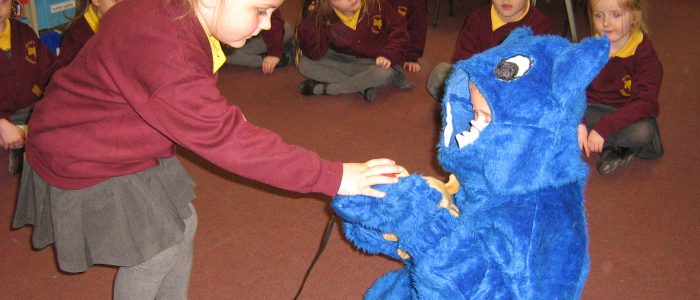
Although there may be genetic differences, all dogs have the potential to bite and this is in fact a part of their normal behavioural repertoire. Contrary to popular opinion the risk is not removed by socialisation, training or neutering.
Most bites (80%) occur in the home environment and young children are most at risk. They occur when the dog is feeling the emotions of fear and anxiety. This can occur during normal day-to-day interactions between the dog and children, so it is important to you and your children learn about these potential risk situations and act in a way that avoids them.
Does this breed shed its hair?
This may be important if a family member suffers from asthma. Breeds that have a lesser tendency to shed coat are listed on the kennel club website http://www.thekennelclub.org.uk
Long haired dogs will also require more time in grooming and coat care.
How much does this type of dog cost to keep?
The cost of keeping a dog tends to increase with its size. Clearly they will eat more food, and if going into kennels will require a larger space. Veterinary care will also be more expensive. Though the cost of procedures like vaccinations, microchips and consultations may be the same for all sizes, drugs and medications are given at a dose that depends on the weight of the dog. Hence there may be considerable greater costs associated with large breeds of dog.
Is this breed likely to develop health problems when older?
There are genetic diseases that can be passed on from the parents to the offspring.
There are screening programmes for some of these
- Hip Dysplasia scheme – dogs over one year of age are X rayed and the hips are given a score related to the changes seen. This is a grading system and the higher the score the worse the hips. Breed averages are published and this may help breeders identify potential breeding stock. If the sire and dam have a good hip score, there is less risk of the offspring having bad hips (though this is not impossible).
- Elbow scheme – similar to above, the X rays of the elbows are given a score reflecting the apparent changes consistent with degrees of elbow dysplasia.
- Eye schemes – Individual dogs of nominated breeds are examined by a specialist ophthalmologist and certified as affected, or not affected, by a range of ophthalmic conditions.
- DNA Tests – More recently DNA tests are available for a range of problems. These have the advantage that they can identify dogs that are genetically clear, those that are affected, and those that are carriers.
To find out more about these schemes, follow the link to:
http://www.the-kennel-club.org.uk/services/public/glossary/health-tests.aspx
Your veterinarian can also advise on diseases that are more common in particular breed types.
MATCHING YOU TO THE DOG
You now realise that there are lots of variables about the dog and your individual lifestyle that need to be considered. The trick is to match you and your characteristics with the right dog. In that way everybody will be happy and your family will enjoy and benefit from having a new member.
The Kennel Club have suggested you ask a number of questions to facilitate this process.
Consider whether you and the prospective dog are:
- Energetic and lively or couch-potatoes
- Strong-willed and ambitious or easy-going and indulgent.
- Friendly with humans or reserved with strangers.
- Playful or uninterested in toys
- Friendly to other dogs or uninterested or incompatible
- Friendly to cats and other pets or uninterested or incompatible
- Affectionate or aloof
The behaviour exhibited by a dog is not simply related to its genetic type, but is also moulded by the experiences it has had in life. Puppy socialisation is important, but all experiences will have an effect – both positive and negative. Breed characteristics are clearly useful, but it is important to assess each dog on its individual merits.
The best run rescue centres will try hard to match the dog to the prospective owner, since if they get it wrong the new owner may be unhappy and the dog may potentially be returned to the shelter or abandoned. Skilled staff assess the nature of the dog and the potential owner subjected to an interview and maybe even a home visit. Some people may find this intrusive, but it is an important part of the whole process.